By: Anthony Bontrager, Managing Director, WestRiver Group
Welcome to our second installment of WestRiver Group’s Leadership Series. Here we plan to talk with leaders from across the global innovation economy who will share their thoughts on a number of timely and relevant topics.
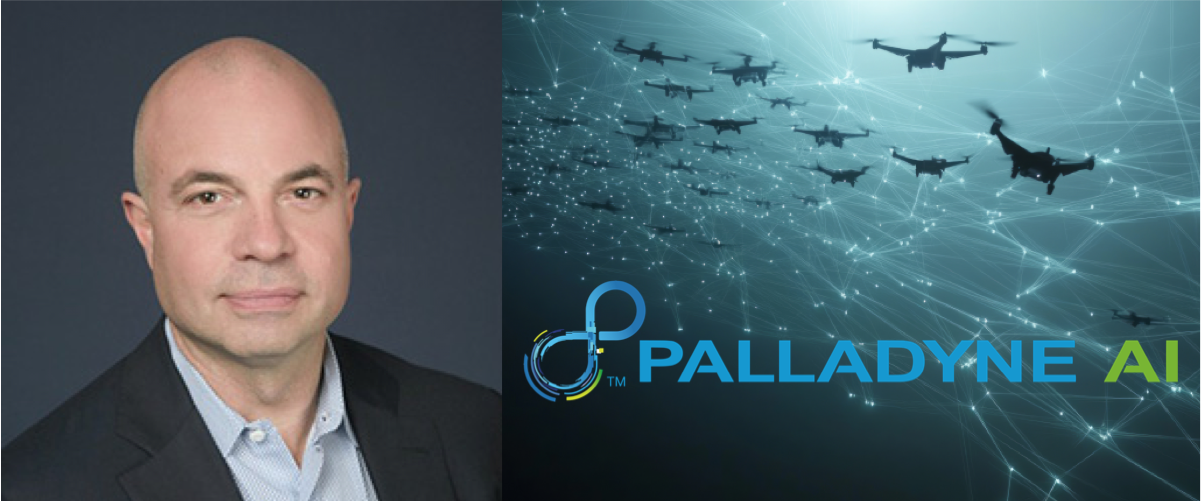
On deck today is Ben Wolff, founder and CEO of robotics AI software company Palladyne AI and WestRiver Group advisory board member.
For a bit of context and history, Ben has been a high-profile executive and private equity investor for decades as both President of Eagle River Holdings, the family office of telecom pioneer Craig O. McCaw and co-founder, Chairman and CEO of Clearwire Corp. Throughout his career, Ben has led over $15B in value creation events. Many of which I’ve had a first-row seat to.
Wireless to Robotics to AI
Anthony: Ben, I think it’s safe to say you’ve pretty much seen it all. One of the youngest associates ever to be made parter at storied Seattle law firm Davis Wright Tremaine, you were recruited by Craig McCaw to lead his family office and oversaw some prolific deal making during your tenure. Now you’re the co-founder and CEO of Palladyne AI the successor company to Raytheon Sarcos and Sarcos Robotics. Take us through your journey and what were some of the most impactful decisions you’ve had to make during your career.
Ben: There’s a lot to unpack there. It’s been a long and gratifying journey, beginning from the time I first started financially supporting myself at 13 years old to starting my first company at 17 years old which generated more than $1M in revenues and was profitable in its first year, to becoming recognized as one of the top 45 lawyers under 45 in the US and one of the top 300 IP strategists in the world, to co-founding and leading Clearwire which included completing the largest venture round ever done at the time, raising billions of capital from Comcast, Google, Intel, Time Warner and others and ultimately retiring from the company after hitting $1B in annual revenues, and then selling the company to Sprint for $14B. But retirement and I didn’t get along very well, so following a 6 month hiatus, I came back to restructure and turn around a failing publicly-traded satellite communications company, creating a positive swing of more than $2B in shareholder value, creating a successful IP innovation and licensing business, and then buying the robotics division of Raytheon (Raytheon Sarcos) in 2015 and bringing in key corporate investors including Caterpillar, Delta Air Lines, GE, Microsoft, Palantir and Schlumberger along the way. After taking Sarcos public in 2021 at a valuation of $1.6B, I took another run at retirement, this time with much better success. My wife (who is also my most valued business partner and advisor) and I have invested in many businesses along the way and started some decidedly low-tech businesses as well. Those pursuits kept me actively engaged, but without the challenges associated with being a full-time public company CEO. Two years after retiring, Sarcos had fallen on hard times, and the board asked me to return as CEO. I was reluctant, but now, two years later, I can say it was one of the best decisions of my career. We pivoted the business to focus on ethical embodied AI, renamed the company Palladyne AI (NASDAQ:PDYN) , and are now focused on making stationary and mobile robots sufficiently smart such that they can observe, learn, reason and act in much the same way that humans do. This is by far one of the biggest opportunities I’ve had the privilege to work on in my career, with a focus on both modernizing American manufacturing and developing swarming capabilities for the US Department of War, both key priorities for the current US administration.
Groundbreaker
Anthony: Clearwire and Sarcos each played the role of disrupter in their respective markets – wireless and robotics. Was the goal to be a fast follower and bypass those who’d gone before, or was the real intent to be a true first mover – break things, iterate, grow? What worked for each and what didn’t? What are the lessons you’ve taken from both and applied them at Palladyne?
Ben: The goal for each company was to deliver innovative products or services that customers couldn’t live without. Our goal was never to lead or to follow, we just didn’t think about it in those terms. It was more about seeing an opportunity to make a real difference – address a real need – and create a profitable company along the way. I’m a big fan of the Blue Ocean Strategy concepts, and I think everything I have done in my career has tried to adhere to that strategy, even before I knew what it was. As it turns out, most everything we did was too early. My track record is replete with not only trying to bring new products to market, but also creating brand new categories. That’s tough. Really tough. Investors are generally willing to accept technology risk or market demand/market adoption risk, but not both, particularly when the capital needs are in the hundreds of millions or billions of dollars. Who is your competition? What is your TAM? How long is the sales cycle? How do you realistically answer these questions when you are creating brand new categories?
Lessons learned:
It is all about the people. I cannot underscore this enough. The best technology and the most brilliant business plan will fail without the right people. I consistently waited too long to reach the right decisions about the wrong people.
Timing is everything. Being too early or too late matters way more than most people think. I was 5 years too early with humanoid robots, despite the fact that we arguably had the best team and the best technology on the planet.
Who your investors are matter. Really matter. Not all money is the same. As hard as this may be to swallow, it may be better for a founder to not get funded at all than to take money from the wrong people.
Most importantly – Life is short, too short. Love what you do, do what you love. If you do, you will bring passion, drive, determination, energy, commitment and tenacity and that combination will beat pure intellect and superior technology every single day, all day long. I’ve never been the smartest guy in the room, but I’ll try harder than everyone in the room. More often than not, that works out.
Dual-use technologies
Anthony: If there’s ever been a poster child for dual use technology, robotics has to be at the top. A vast majority of Palladyne’s efforts are military related. Can you share your thoughts on how Palladyne’s technology could find its way into traditional commercial uses? Was this always a part of your long-term roadmap for the company?
Ben: Dual use opportunities was the primary driver behind our original acquisition of Raytheon Sarcos. Raytheon at the time was exclusively a defense company. The US taxpayers, through DARPA, DOD and NASA, had invested hundreds of millions of dollars into the technologies that Raytheon Sarcos had. Our view was that commercial and industrial enterprises needed the capabilities every bit as much or more than the military did. Other than kinetic weapons systems and a few other notable areas, that’s true with a lot of technologies that the military uses and needs. The same holds true today with our ethical embedded AI. Enabling robots to be able to be agile – to able to handle variability and unexpected circumstances that defy pre-programming, is a huge value add to both commercial enterprises and to our military. Similarly, enabling collaborative swarming of drones, such that a single operator can manage an entire fleet of autonomous drones, has applicability across defense, public safety and commercial applications.
Areas of Opportunity for new Startups
Anthony: We’ve talked a lot about your background as a general counsel and then president and CEO at a number of technology first organizations. Where do you see the “puck” moving to over the next few years across the global innovation economy? What excites you and would get you to write a check?
Ben: Consistent with my comments above, first and foremost, we invest in teams. That doesn’t mean teams that have been successful in the past. It means teams with vision, drive, tenacity and an extremely clear vision about how to execute, while also being humble enough, and having a willingness to pivot when the time is right. After that, it’s about having a simple, clear-eyed thesis about why the prospective customer base can’t live without the product or service. Third, it’s about how the company is going to create a moat around it’s business, and don’t waste any oxygen telling me that the answer is to just go faster than everyone else. That’s a fine answer for a lot of VC’s, but not for me.
In terms of areas of interest – I fundamentally believe the shortage of blue collar workers in the US and in other industrialized nations is a huge problem that isn’t going away. It is only going to become more acute. Companies that can help mitigate that problem have significant tail winds and huge opportunities. Another area of interest for us right now, and an area that we have made some investments in, relates to human longevity. Let’s face it, although not expressly stated in Maslow’s hierarchy of needs, every sane person on the planet is less than excited about ageing, physical and mental decline and dying. People will spend an increasing proportion of their disposable income to stave off the inevitable.
Lessons on Leadership
Anthony: What person or life event helped shape you into the leader you are today? Is there any advice you’d care to share with young leaders as they chart their company’s course?
Ben:
My former mentor/partner, who gave me more opportunities than anyone with my experience (or lack thereof) should have ever been given.
More mistakes than I can count. Learn from the mistakes and don’t convince yourself that you have when you really haven’t.
Always hire people that are better than you, and then give them the room to do what they need to do. Don’t expect perfection from your team and don’t expect them to get things done the way you would do them.
Seek out opportunities that are novel.
Find mentors, advisors and team members that are smarter than you or that have experiences that are different than yours. Having said that, if you need a consultant, a book or a paint-by-numbers book to guide you, maybe you should re-think the business you are in.
Your Superpower
Anthony: What would you describe as your leadership superpower?
Ben: Still trying to find one.
Legacy
Anthony: What do you want your legacy to be?
Ben: I’m living in the moment and looking forward. I don’t think about legacy. It seems a little too vain to put any energy into thinking about how I will be remembered. In two generations, at best, no one will give a rip who I was or what I did. That’s not being a fatalist, that’s just reality. So I focus on how I impact people today and the good that I can do, and the rest will sort itself out.